
A Hunter's Guide to Waterproof & Breathable Fabric Science

📌 Table of Contents
A Hunter’s Guide to Waterproof & Breathable Fabric Science
For hunting and outdoor brands, waterproof and breathable fabric is never just a material choice. It is a product decision that shapes comfort, safety, trust, and how the end user judges the garment in the field.
On paper, fabric development can look deceptively simple. A brand chooses a membrane, sets a target rating, adds a DWR finish, and moves into sampling. In reality, strong product performance comes from how those decisions work together in a finished garment. A shell that looks impressive on a spec sheet can still feel too stiff, too noisy, too clammy, or simply wrong for the hunt it was meant for.
That is why this topic matters so much for brand founders, product developers, and sourcing teams. The challenge is not only understanding waterproof and breathable fabric science. It is understanding how to choose, specify, and validate the right fabric system for the kind of hunter you serve.
This guide is written with that practical goal in mind. It is not a textbook on membrane chemistry. It is a decision guide for hunting apparel brands that want to build garments that perform the way end users actually expect in the field. That is also where a development-oriented manufacturing partner1 can add real value: not by making the material story more complicated, but by helping brands turn material decisions into field-ready product decisions.
Short Answer
Waterproof and breathable fabric science matters because hunting apparel has to manage two kinds of moisture at the same time: external moisture such as rain, snow, and wet brush, and internal moisture generated by body heat and sweat. The right fabric system has to block one while allowing the other to escape.
For brands, the practical challenge is not simply choosing the highest waterproof rating or the most famous membrane. It is choosing the right combination of membrane, laminate construction, face fabric, DWR, seam strategy, and trim logic for the intended hunt, climate, movement level, and user expectation. In real product development, the best choice is usually the one that produces the most balanced field performance, not the most aggressive lab number.
Who This Guide Is For
This guide is written for:
- hunting and outdoor brand founders
- product developers
- sourcing teams
- brands building waterproof shells, hybrid outerwear, or quiet weather-protective hunting garments
It is especially useful for teams that want to understand not only what the technical terms mean, but how those terms affect finished garment performance, development risk, and end-user experience.
A Quick Decision Framework
Before choosing a waterproof fabric, a brand should be clear on four things:
-
Who is the garment for?
A mountain hunter, a whitetail bowhunter, and a waterfowl hunter may all need weather protection, but not in the same way. -
What matters most in the field?
Silence, durability, packability, all-day comfort, and severe-weather protection do not always peak at the same time. -
What type of product is being built?
A packable emergency shell, a premium all-round shell, and an insulated waterproof outerwear piece should not be specified the same way. -
What is being chosen: a fabric, or a garment system?
Membrane, laminate construction, DWR, face fabric, seam sealing, zippers, and lining all work together. Evaluating only one layer of the system usually leads to mistakes.
What This Looks Like in Product Development, Not Just in Fabric Marketing
This is where many brands lose time. On paper, a fabric story can sound complete. In development, the real questions are much more practical.
A shell can carry a strong waterproof and breathable claim and still fail for the intended user if:
- the face fabric is too noisy for stalking or treestand use
- the shell feels too stiff once the garment is fully built
- the DWR is acceptable in lab conditions but drops too quickly in wear
- the zipper and entry-point logic do not support the fabric claim
- the product is overbuilt for the price point and user expectation
In other words, spec-sheet strength and product strength are not the same thing. Brands usually make better decisions when they review a fabric as part of a full garment system, not as an isolated material story.
A Useful Brand-Side Test
Before approving a waterproof fabric direction, ask:
- Would the intended hunter actually enjoy wearing this in the field?
- Does the shell feel right for the hunt, not just right for the lab report?
- Is the fabric serving the product brief, or is the product being forced to serve the fabric?
- If the customer complains later, what will they complain about first: leaking, wetting out, stiffness, noise, or comfort?
Those questions often reveal more than one more round of spec-sheet discussion.
What Waterproof and Breathable Really Mean in Hunting Apparel
At the core of high-performance outerwear is a simple conflict: hunters need a garment that can stop outside water from entering while letting inside moisture escape.
Waterproof Means Liquid Water Stays Out
A waterproof fabric prevents liquid water from penetrating under pressure. That pressure does not only come from rain. It can also come from leaning on wet ground, kneeling, carrying a pack, or brushing through wet vegetation.
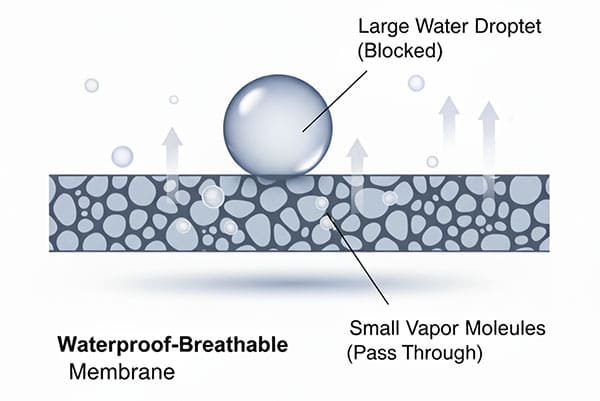
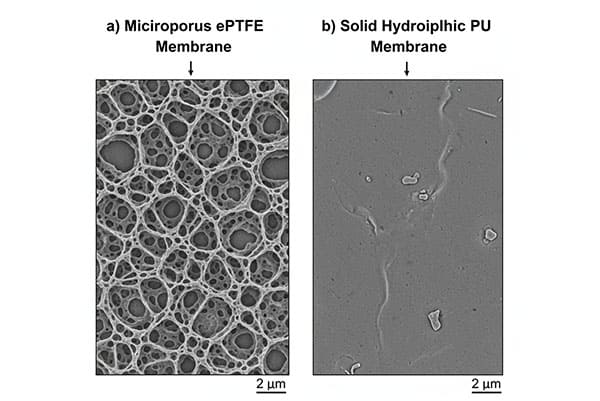
A water droplet is large on a molecular scale. A waterproof membrane works because its structure blocks liquid water while still allowing water vapor to pass through. That is why a good hunting shell can keep a user dry in extended wet weather, even when the fabric is under real-world pressure.
Breathable Means Sweat Vapor Can Escape
Breathability refers to how well a fabric allows perspiration vapor to move out of the garment. This matters because a hunter does not only get wet from rain. They also get wet from their own effort.
When that moisture stays trapped, it condenses back into liquid inside the garment system. The result is the familiar cold, clammy feeling that makes a shell feel worse than expected, even if it never leaked from the outside.
Why Hunters Need Both at the Same Time
For the end user, waterproof and breathable performance are rarely felt separately.
A hunter may climb hard to a glassing point, generate heat and moisture, then sit still in cold wind. A bowhunter may move quietly through wet brush and need both silence and weather resistance. A waterfowl hunter may face exposure, spray, and repeated contact with moisture. The garment only succeeds if it can handle external weather and internal moisture as one system.
The Ratings Brands Actually Need to Understand
Technical fabric numbers matter, but only if brands understand what they mean in product terms.
Hydrostatic Head: What Waterproof Ratings Actually Mean
Waterproof ratings are usually shown in millimeters and measured through hydrostatic head testing2. In simple terms, the higher the number, the more water pressure the fabric can withstand before leaking.
As a practical rule for hunting apparel:
- 5,000 mm can work for light rain or casual weather protection, but it is usually too weak for a serious waterproof claim.
- 10,000 mm is a reasonable baseline for many all-round hunting shells.
- 15,000 mm provides stronger protection for wetter and more demanding use.
- 20,000 mm and above is where premium severe-weather shell expectations often begin.
But the number itself is not the full answer. A 20,000 mm fabric does not automatically create a better hunting garment if the garment becomes too stiff, too noisy, or overbuilt for the intended user.
MVTR and RET: What Breathability Means in Product Terms
Breathability is often measured through MVTR or RET. MVTR is usually shown in grams per square meter per 24 hours. RET works the other way around: lower is better.
In product terms, the question is not “Which number is highest?” The better question is: What level of moisture management does this product actually need?
An all-round shell for moderate movement and mixed weather may not need the same breathability target as a mountain hunting shell designed for strenuous climbing. Brands that focus only on the number often miss how the garment will actually feel in use.
When Performance Numbers Help — and When They Mislead
Numbers help when they define a realistic performance floor.
They mislead when brands treat them as a shortcut to product success.
A shell with impressive lab numbers can still disappoint if:
- the face fabric wets out too easily
- the DWR loses performance too quickly
- the garment is too noisy for the intended hunt
- the seam and zipper strategy is weak
- the end user expected more comfort than the fabric system can actually deliver
In real product development, ratings are necessary, but they are never enough on their own.
How Brands Should Choose Between 2L, 2.5L, and 3L
The membrane matters, but construction matters just as much. In practice, many field-level differences come not only from the membrane chemistry, but from how the laminate is built.
When 2-Layer Still Makes Sense
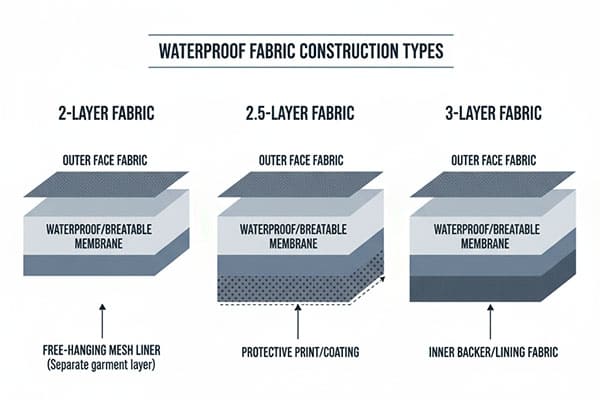
A 2-layer construction bonds the membrane to the face fabric and uses a separate inner liner for protection.
This can still make sense in:
- insulated waterproof outerwear
- softer-feeling weather-protective garments
- products where a quieter handfeel matters more than the lightest or most technical construction
2-layer is not outdated. It is simply more dependent on the right garment category.
When 2.5-Layer Is Good Enough — and When It Is Not
2.5-layer fabrics are attractive because they are light, compact, and commercially efficient. They work well in:
- packable emergency shells
- lightweight backup rainwear
- products where weight and compactness matter more than premium handfeel
Where they often struggle is in long-term comfort, durability, and next-to-skin feel. For serious hunting shells, 2.5-layer frequently starts to feel like a compromise.
Why 3-Layer Becomes the Standard for Serious Shells
A 3-layer construction bonds the membrane between the face fabric and an inner backer. This creates a more integrated, durable, and stable fabric system3.
For serious shells, 3-layer often becomes the standard because it better supports:
- durability
- consistency between sample and bulk
- weather protection under demanding use
- long-term premium positioning
For brands building technical outerwear, this is often where the garment starts to feel commercially credible as a premium waterproof product4.
What the End User Actually Feels from Each Choice
The end user usually does not think in terms of 2L, 2.5L, or 3L. They feel:
- whether the garment is too crinkly
- whether it layers smoothly
- whether it feels overly stiff
- whether it packs easily
- whether it feels quiet enough
- whether it feels like premium gear
That is why brands should treat construction choice as a user-experience decision, not only a technical one.
What Makes a Waterproof Hunting Garment Work in Real Use
A waterproof hunting garment succeeds when the full system works together in realistic use.
DWR Is Not a Minor Finish
DWR helps prevent the face fabric from wetting out. When the face fabric becomes saturated, breathability drops and the garment begins to feel heavier, colder, and less comfortable.
This is why DWR should never be treated as a small finishing detail. It plays a major role in how the product feels after repeated field exposure.

Seam Sealing Is Part of the Product, Not a Decoration
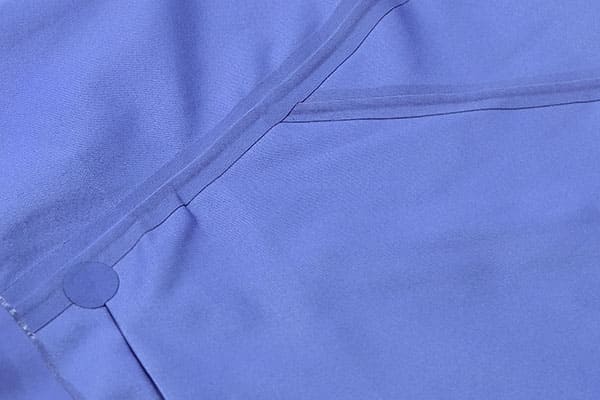
Every stitch creates a water-entry point. Without seam sealing, even a strong membrane fabric will leak in finished garment form.
For serious waterproof hunting outerwear, fully sealed construction is usually the right expectation. Critically sealed garments can work in some price-driven or lighter-use categories, but they are rarely the best choice when the brand promise depends on real weather protection.
Zippers, Storm Flaps, and Other Water Entry Points
Water does not only try to enter through the main fabric. Zippers are one of the most common weak points.
Water-repellent zipper systems like AquaGuard® can help5, but the best solution depends on the garment. Some products need only a strong zipper choice. Others need storm flap logic as well. This should be decided as part of the garment concept, not left to the end.
Face Fabric, Noise, and the Silent Trade-Off
For many hunting styles, silence matters. That is why face fabric selection is one of the biggest product decisions in the whole shell system.
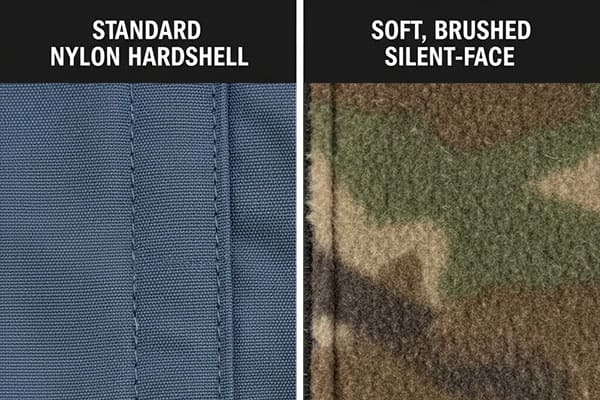
A brushed or peached face can improve acoustic performance and help reduce the “swish” that many hunters dislike6. But silence often comes with trade-offs in surface behavior, durability feel, or DWR behavior. Brands should not evaluate silence in isolation. The real question is whether the fabric is quiet enough while still serving the rest of the product brief.
Backer Fabrics and Comfort Over Time
Backer choice influences how the garment feels in wear, especially over layers and during long periods of use.
A shell that performs well on paper can still feel wrong if the backer makes layering awkward, traps too much heat, or reduces overall comfort. That is why next-to-skin and over-layer feel should be evaluated as part of sample approval, not treated as a secondary detail.
A Pre-RFQ Checklist for Hunting Brands
Before sending a waterproof outerwear brief to a supplier or manufacturing partner, a brand should ideally lock the following:
- the target hunt type or terrain
- expected weather exposure
- movement level: active, mixed, or mostly static
- whether silence is essential, helpful, or secondary
- target waterproof range
- target breathability range
- laminate direction: 2L, 2.5L, or 3L
- expected face fabric feel
- DWR expectation
- zipper strategy
- seam sealing expectation
- target retail level or product tier
This does not need to become a heavy document. But if most of these points stay unclear, the project usually becomes more reactive, more expensive, and less accurate during sampling.
What Brands Often Get Wrong When Specifying Waterproof Fabrics
In our experience, brands usually do not struggle because they lack ideas. They struggle because material decisions are often made in the wrong order, with the wrong priorities, or without enough real-use validation.
Chasing Ratings Without Defining the Product First
A brand may ask for 20k/20k performance before clearly deciding what kind of garment it is building. This often leads to an overbuilt shell that looks strong on paper but feels wrong in the field.
The better sequence is:
- define the user and use case
- define the garment type
- choose the appropriate performance level
Choosing the Membrane Before Choosing the Garment Logic
Brands sometimes start by asking for a named membrane or a famous technology story. That may feel reassuring, but it is rarely the best starting point.
The stronger sequence is to first decide:
- what weather problem the garment must solve
- what noise level is acceptable
- how much packability matters
- what price level the product needs to support
Only then does membrane choice become meaningful.
Underestimating Face Fabric Feel and Noise
This is one of the most common mistakes in hunting apparel development.
A fabric can rate well, sample cleanly, and still feel wrong to the hunter. It may be too noisy for stalking. It may feel too hard for a premium user expectation. Or it may feel more like a mountaineering shell than a hunting garment.
That is why sample-stage judgment matters so much. A swatch alone rarely tells the full story.
Treating DWR as a Small Detail
A weak DWR can change how a product feels in real use far more than many brands expect. Once the face wets out, breathability perception drops fast. The user may blame the whole garment, not the finish.
This is why DWR choice should be treated as a core product decision, especially when the garment will face prolonged moisture.
Confusing Lab Performance with Real Product Performance
Lab values are important, but garments fail in the field when the full product system is not aligned.
A shell only performs as intended when the membrane, face fabric, DWR, seam sealing, zipper logic, and construction details all support the same product goal. If those pieces are working against each other, the lab number becomes much less useful.
How Brands Should Specify and Test Waterproof Fabrics More Effectively
Fabric selection becomes far more reliable when brands move from broad interest to specific specification and validation.
What a Tech Pack Must Lock Before Fabric Sourcing
Before sourcing begins, a strong tech pack should lock:
- fabric code or target fabric concept
- waterproof and breathability targets
- laminate construction
- face fabric expectations
- DWR direction
- trim logic
- target use case
- color or camo direction
The goal is not to over-document. The goal is to remove avoidable guesswork.
What Brands Should Ask a Fabric Supplier or Manufacturing Partner
Useful questions include:
- Can you provide third-party test data?
- How does the fabric behave after lamination?
- How stable is the DWR after wear and washing?
- What is the MOQ in custom color or camo?
- What is the lead time?
- How does the fabric feel and sound in actual garment form?
Strong answers to these questions usually matter more than marketing language.
What Should Be Tested Before Bulk
Before bulk, brands should validate more than just a swatch. The process should include:
- incoming fabric consistency
- trim compatibility
- seam sealing performance
- zipper and entry-point logic
- sample-to-bulk alignment
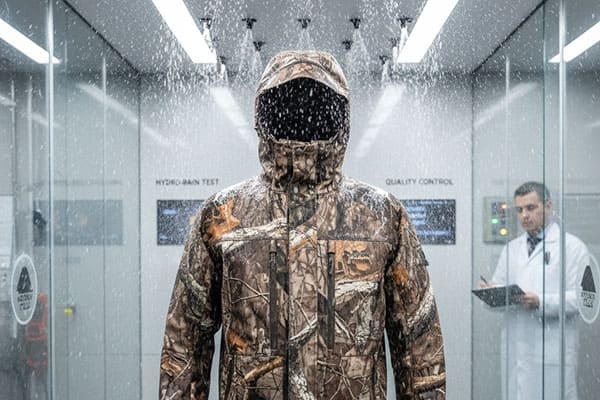
- garment-level rain or weather simulation
Why Material Choice Should Be Validated as a Garment, Not Just as a Swatch
This is one of the biggest practical lessons in technical hunting apparel.
Swatches are useful for narrowing the field. Garments are what reveal the truth.
Only a garment sample shows:
- how the fabric moves
- how noisy it feels
- how it layers
- how the pocket logic works
- how trim choices affect use
- whether the product still feels like what the brand intended
That is why strong product development does not stop at fabric approval. It validates fabric choice in garment form.
A Practical Fabric Selection Framework for Hunting Brands
For an All-Round Hunting Shell
A balanced all-round shell usually needs:
- credible waterproof protection
- enough breathability for moderate movement
- a commercially realistic construction
- comfort across multiple use cases
This often leads brands toward a balanced 2L or 3L choice depending on their market position.
For a Mountain or Harsh-Weather Shell
This category usually needs:
- stronger weather protection
- higher confidence in seam and zipper logic
- more robust construction
- stronger durability positioning
This is where 3-layer systems often become the right answer.
For a Quiet Whitetail or Stalking Outer Layer
This category should prioritize:
- lower noise
- realistic movement comfort
- controlled weather protection
- a face fabric that supports stealth use
Here, silence and feel may matter as much as raw rating numbers.
For a Packable Emergency Shell
This category can tolerate more compromise in:
- handfeel
- long-term ruggedness
- premium feel
But it still has to be honest in its promise. This is where 2.5-layer can still make sense.
For an Insulated Waterproof Outerwear Piece
This category often benefits from:
- a construction that works well with insulation and lining
- enough protection for weather exposure
- a softer and more wearable overall feel
In some cases, this is where 2-layer still remains a practical and commercially strong option.
Frequently Asked Questions
What waterproof rating is realistic for a premium hunting shell?
For many premium hunting shells, 10,000 mm is the minimum acceptable starting point, while 15,000–20,000 mm is often where brands begin to signal more serious wet-weather performance. The right number depends on the garment type and user expectation.
When should a brand choose 3-layer instead of 2-layer?
A brand should usually choose 3-layer when building a serious shell where durability, weather protection, and long-term product credibility matter more than softness alone. 2-layer can still be a strong choice in insulated or softer-feel outerwear categories.
How should brands think about silent fabrics versus durability?
Silent fabrics should be evaluated as part of the whole garment goal. The question is not whether the fabric is absolutely silent, but whether it is quiet enough for the intended hunt while still meeting the durability and weather needs of the product.
Is a branded membrane always the right choice for a mid-size hunting brand?
Not always. A branded membrane can add trust and market recognition, but it is not automatically the best commercial or product-level decision. The better choice depends on use case, product level, flexibility, and what the finished garment actually needs to achieve.
What should be locked in the tech pack before waterproof fabric sourcing starts?
At minimum, the intended use case, performance targets, construction direction, face fabric expectations, trim logic, and target market position should be clear before sourcing begins. Without that, fabric selection becomes far less reliable.
How should brands test waterproof fabrics before bulk production?
Brands should validate fabrics at garment level, not only through swatches or lab reports. Testing should include rain performance, seam logic, trim compatibility, and whether the finished sample behaves the way the product was intended to behave.
Final Thoughts
Waterproof and breathable fabric science matters because it shapes how a hunting garment performs when the product leaves the showroom and enters real weather, real movement, and real user judgment.
For brands, the right choice is rarely about chasing the highest spec. It is about building the right material system for the right hunt, the right user, and the right product promise.
That is why strong fabric decisions depend on more than technical data. They also depend on product judgment, development logic, and realistic validation. When those three things work together, waterproof fabric stops being a marketing claim and starts becoming real field performance. For hunting apparel brands, that is the difference between a fabric story that sounds convincing and a product that actually earns trust in the field.
References
[1] Your Expert Hunting Apparel Manufacturer & Development Partner 1
[2] How Waterproof & Breathability Ratings Work 2
[3] GORE-TEX Technology | Original GORE-TEX Products 3
[4] 3-Layer Seam Sealed Jackets | Hi-nect 4
[5] AQUAGUARD® (VISLON®) | YKK 5
[6] Science of Sound | Sitka Gear 6
Ready to elevate your outdoor apparel line?
Let’s talk. We offer flexible MOQ, fast samples, and expert guidance — get your quote today.
You may also be interested in:

Lowering MOQs: A Practical Guide for Hunting & Outdoor Brands
For many hunting and outdoor brands, MOQ is not just a pricing issue. It is often the first real supply-chain
How Hunting Apparel Brands Move from Prototype to Production
For hunting and outdoor brands, moving from prototype to production is not just a technical process. It is the stage
Top 13 Hunting Apparel Manufacturers 2026
When buyers search for hunting apparel manufacturers, they are often looking for more than one thing at the same time.