Lowering MOQs: A Practical Guide for Hunting & Outdoor Brands
📌 Table of Contents
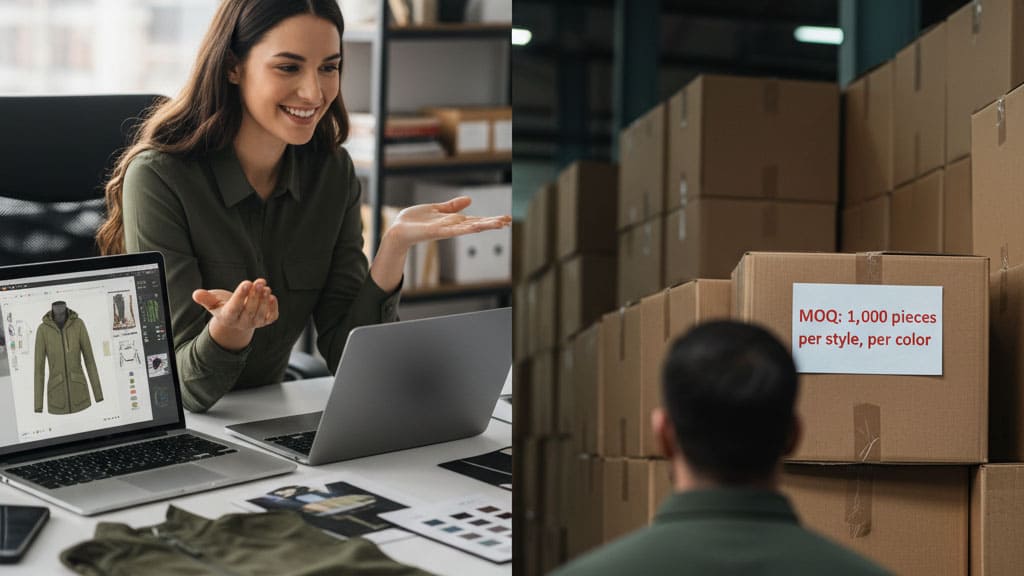
For many hunting and outdoor brands, MOQ is not just a pricing issue. It is often the first real supply-chain constraint that forces a brand to decide how serious, disciplined, and commercially realistic its product strategy really is.
A high MOQ does not only mean “more units.” It usually means more cash tied up before the market has spoken, more inventory risk, more pressure to discount, and less room to test, learn, and improve. For smaller and growing brands, that can slow momentum long before the product has a fair chance to prove itself.
This guide is written for founders, product developers, and sourcing teams who want to lower MOQ without damaging product quality, brand positioning, or long-term product logic. The goal is not to chase the lowest possible number. The goal is to build a smarter MOQ strategy—one that matches your brand stage, product complexity, and the way your customer will actually buy.
Short Answer
MOQ in hunting and outdoor apparel is rarely one simple number. It is usually the result of several minimums stacked together: fabric minimums, dye-lot minimums, trim minimums, factory setup costs, and production-line efficiency requirements. That is why a single style can suddenly become much more expensive or much less flexible than expected.
The brands that lower MOQ most effectively usually do not do it by “pushing harder” on the factory. They do it by reducing unnecessary complexity early. That often means using in-stock or running-line materials, consolidating trims across styles, simplifying color decisions, planning smaller but smarter launches, and treating MOQ as a strategic business decision rather than just a supplier quote.
The goal is not simply low MOQ. The goal is smart MOQ—a volume level that helps you enter the market, protect cash flow, learn faster, and build a better product line over time.
Who This Guide Is For
This guide is especially useful for:
- new hunting and outdoor brands
- growing brands launching a new category
- product developers working with limited initial volumes
- sourcing teams trying to reduce risk before bulk
- founders who need manufacturing flexibility without weakening product quality
A Quick MOQ Reality Check
Before trying to lower MOQ, it helps to understand five things:
-
MOQ is not one single number.
Fabric MOQ, color MOQ, trim MOQ, and garment MOQ are often different things. -
Fabric decisions usually set the real floor.
Custom colors, custom fabric development, and specialized finishing processes often drive MOQ higher than brands expect. -
Small trims can create big problems.
A zipper, transfer label, or molded component can quietly become the part that makes the whole project inflexible. -
The cheapest MOQ solution is not always the smartest.
A “low MOQ” offer can hide weaker materials, inconsistent bulk execution, or compromises that damage the product. -
Smart MOQ is better than low MOQ.
The right question is not “How low can this go?” but “How low can this go without creating bigger business problems later?”
Why MOQ Is High in Hunting Apparel in the First Place
A high MOQ can feel arbitrary when you first receive a quote. In reality, it usually reflects the structure of the supply chain behind the garment.
Fabric Mills Usually Set the Real Floor
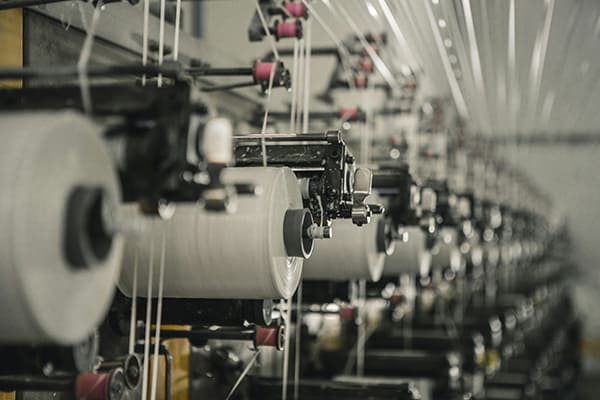
Your garment does not begin on a sewing line. It begins in the textile supply chain—often with yarn, weaving or knitting, dyeing, and finishing. Each stage has its own economic minimum.
A weaving or knitting mill may require a minimum run just to make setup worthwhile. A dye house may require a minimum dye lot for a custom color because small batches are inefficient, chemically harder to control, and more expensive per meter. Finishing processes such as waterproof lamination, brushing, or DWR application can add another layer of minimums on top of that.12
For brands, the practical meaning is simple: as soon as you ask for a custom fabric, a custom color, or a special finish, MOQ often rises fast.
Trims Quietly Push MOQ Higher
MOQ problems do not only come from fabric. In many cases, trims quietly become the real constraint.
Custom zipper colors, molded hardware, woven labels, heat transfers, and printed packaging all come from their own suppliers, each with their own setup costs and minimums. A technical jacket might rely on dozens of such components, and one small custom item can push the whole project into a less flexible volume range.34
This is one reason brands often underestimate MOQ: they focus on the shell fabric, but it is a trim decision that quietly removes flexibility.
Factory Setup Costs Still Matter
Even if the materials are already available, factory economics still matter.
Before production begins, there is pattern and grading work, marker making, cutting setup, sewing-line configuration, operator training, quality planning, and production scheduling. Those are largely fixed costs. Whether a line runs for 100 pieces or 1,000 pieces, the preparation work still exists.
That is why a factory does not only think in terms of “Can we make this?” It also has to think in terms of “Does this run make sense relative to setup time, line utilization, and other orders already in planning?”
MOQ Is Really a Combination of Several Minimums
This is the part many brands miss:
MOQ is rarely one number. It is often a combination of:
- fabric MOQ
- custom color MOQ
- trim MOQ
- style MOQ
- factory efficiency MOQ
That is why a project can look feasible at first, then become difficult once materials, trims, and construction details are confirmed.
Why High MOQ Becomes So Dangerous for Smaller Brands
MOQ is not just a sourcing inconvenience. For smaller brands, it can change the entire risk profile of the business.
It Locks Up Cash Before the Market Has Spoken
A large opening order can tie up capital long before you know whether the product will really sell. That means less cash available for:
- marketing
- fit refinements
- next-season development
- shipping and warehousing
- reorders on proven products
This is one of the biggest reasons MOQ hurts growing brands: it turns uncertain demand into committed inventory too early.
It Pushes Brands Toward Discounting Too Early
When order volumes are too high for the real pace of sales, brands often end up discounting sooner than planned. That may solve an inventory problem in the short term, but it can weaken:
- perceived product value
- margin structure
- future pricing power
- the premium positioning of the brand
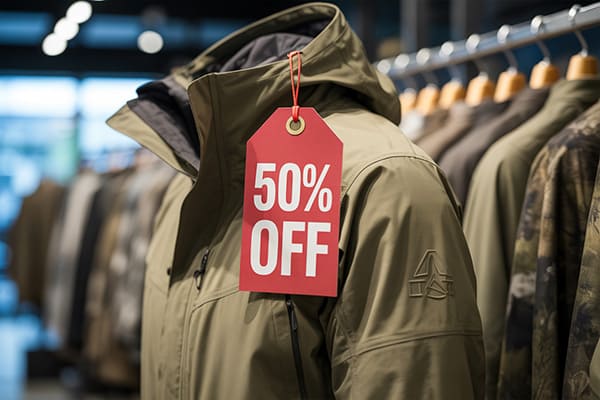
For hunting and outdoor brands, especially those trying to build a more premium or specialist image, this is not a small problem. Repeated discounting can slowly reset what customers think the product is worth.
It Slows Product Learning
Smaller brands usually need to test, learn, and improve. A first launch is rarely perfect. That is normal.
But when MOQ is too high, it becomes much harder to:
- test a niche idea
- try a new category
- refine fit after early feedback
- improve trims or usability
- validate demand before scaling
In other words, high MOQ can trap a brand into making big commitments before it has earned enough real-world learning.
It Concentrates Supply Chain Risk
A large order can make one SKU, one style, or one material package disproportionately important. If that product is delayed, underperforms, or misses the market, too much of the brand’s working capital and attention goes down with it.
That is why MOQ is not only a cost issue. It is also a risk concentration issue.
What Actually Lowers MOQ — and What Only Looks Like a Solution
Lower MOQ is possible, but usually not by arguing harder. It comes from making better decisions earlier.
Use In-Stock or Running-Line Fabrics First
This is often the most effective way to lower MOQ in real life.
If you choose a fabric that the manufacturer already uses regularly—or can access from a running line rather than a custom development—the supply chain becomes more flexible. You are no longer trying to trigger a full custom minimum just to launch one product.
The trade-off is obvious: you give up some exclusivity. But for many brands, especially at launch stage, that is a much smarter compromise than tying up capital in a custom fabric before demand is proven.
This is one of the clearest cases where a development-oriented partner can help. A manufacturer that understands your category should be able to tell you which stock or running-line options are close enough to support your product goals without forcing an unnecessary MOQ burden.
Consolidate Trims Across Styles
Many brands treat every style like an independent world. That sounds creative, but it often drives MOQ up.
A smarter approach is to share what can be shared:
- zipper families
- label systems
- cord locks
- adjustment hardware
- packaging elements
When multiple styles use the same components, you create better leverage across the line. This helps meet supplier minimums without inflating any one style too aggressively.
Reduce Color Complexity Before You Reduce Product Quality
If you need to simplify, the first place to look is often color count—not core product quality.
Too many brands try to lower MOQ by weakening the product. But in early-stage launches, reducing color fragmentation is usually a smarter move than downgrading fabric, fit, or usability. One strong hero colorway often teaches you more than three under-supported ones.
Launch Fewer, Smarter SKUs
MOQ pressure often gets worse when a brand tries to launch too many products at once.
A smaller line with:
- one hero product
- one supporting product
- shared trims
- fewer colorways
is often healthier than a broad first collection with too much complexity and too little sales certainty.
This is one of the most overlooked MOQ strategies: it is sometimes easier to protect the product by simplifying the line.
Pay for Flexibility When It Protects Cash Flow
Some brands resist surcharge discussions because they only look at unit cost.
But in early-stage production, a reasonable surcharge can be the smarter decision if it allows you to:
- lower inventory risk
- preserve cash flow
- test demand
- avoid a much larger commitment too early
A slightly higher unit cost is sometimes a better business outcome than a lower unit cost tied to a much riskier opening order.
Why “Very Low MOQ” Can Hide Bigger Problems
Not every low MOQ solution is a good one.
Sometimes an ultra-low MOQ offer hides trade-offs such as:
- downgraded material choices
- simplified construction
- poor trim consistency
- unstable production quality
- weak scalability if the product succeeds
This is why smart MOQ matters more than lowest MOQ. The right solution should protect not only the first order, but also the product direction and the brand’s next step.
Where Brands Usually Get MOQ Strategy Wrong
MOQ problems often start with the brand’s own decisions.
Asking for Custom Everything Too Early
Custom fabric, custom color, custom trims, custom packaging, custom hardware—on a first launch, that combination can quickly turn a promising idea into an inflexible project.
The question is not whether customization is valuable. It is whether the market has earned that level of commitment yet.
Treating Every Style Like a Separate Island
If every style has its own fabric, trims, color logic, and component system, MOQ pressure multiplies quickly.
A line plan should work like a system, not a set of unrelated projects.
Chasing Exclusivity Before Validating Demand
Exclusivity can sound attractive, especially for premium brands. But exclusivity before proven demand often means higher MOQ, higher cost, slower learning, and more inventory risk.
There is a time for proprietary development. It does not need to be the first production run.
Underestimating the Impact of Trims and Colorways
Many brands focus almost entirely on shell fabric and ignore how much MOQ pressure can come from smaller items. That is where avoidable cost and complexity often enter the project.
Choosing a Supplier Only Because They Promise Low MOQ
A supplier who promises low MOQ without explaining how they make it work should raise questions, not confidence.
The better question is:
What compromises made that MOQ possible?
A Smarter MOQ Strategy for New and Growing Hunting Brands
MOQ strategy should change as your brand grows.
For a First Launch
For most first launches, the smartest approach is usually:
- fewer SKUs
- fewer colorways
- in-stock or running-line fabrics
- shared trims
- one strong hero product
The goal is not to look big. The goal is to learn fast without creating dangerous inventory pressure.
For a First Proven Reorder
Once the first run has proven demand, you can start adding more depth where it matters:
- improved custom details
- additional colorways
- upgraded trim packages
- deeper material differentiation
This is often the right stage for a more customized version 2.0.
For Hero Products
Not every style deserves the same MOQ risk. Your hero product may justify more investment—but only when its role in the line is clear and market interest is more than theoretical.
For Test Products or Niche Categories
Specialized ideas, niche categories, or first attempts in adjacent markets should usually be treated as learning projects, not large-volume bets.
This is especially relevant for brands exploring:
For Premium vs. Commercial Product Planning
A premium line does not mean everything must be custom from day one. A commercial line does not mean the product has to feel generic.
Different product tiers can carry different MOQ logic. Strong line planning means knowing where to place your complexity—not spreading it across everything.
What to Ask a Manufacturer Before Discussing MOQ
The wrong question is:
“What is your MOQ?”
The better questions are:
Which Part of the MOQ Is Actually Negotiable?
Ask whether the real constraint comes from:
- fabric
- color
- trims
- style count
- factory setup
- packaging
You need to know which number is the real bottleneck.
What In-Stock Options Are Available?
Ask whether the manufacturer has:
- running-line fabrics
- stock zipper options
- standard hardware systems
- label options
- shared components already in use
This question often opens more realistic solutions than trying to force custom development immediately.
What Changes Would Reduce MOQ Without Damaging the Product Too Much?
This is one of the most important questions a brand can ask.
A good manufacturing partner should be able to tell you:
- what can be simplified
- what should not be simplified
- where flexibility is safe
- where compromise would hurt the product too much
That is the difference between a transactional supplier and a useful development partner.7
What Surcharges Apply Below Standard MOQ?
Surcharges are not automatically bad. Hidden surcharges are bad.
A transparent surcharge discussion helps you evaluate the real trade-off between flexibility and total project cost.
What Lead-Time Risks Come with Small-Batch Production?
A lower MOQ does not always mean faster production. Sometimes smaller runs can create scheduling complications or slower trim alignment. It is better to know that early than assume that “small” automatically means “quick.”
A Pre-RFQ MOQ Checklist for Hunting & Outdoor Brands
Before requesting a quote, try to lock the following:
- target order size
- number of styles
- number of colorways
- expected retail range
- acceptable fabric customization level
- acceptable trim customization level
- must-keep product features
- areas where compromise is acceptable
- launch timing
- reorder expectations
This kind of clarity helps the manufacturer give you better answers—and helps you make better decisions in return.
Frequently Asked Questions
What MOQ is realistic for a new hunting apparel brand?
That depends on the material package, trim complexity, and how custom the project is. For many new brands, the most realistic path is not to chase a perfect custom setup immediately, but to reduce complexity and build the first launch more strategically.
Is it better to reduce styles or reduce colorways first?
Often it is better to reduce colorways first, especially if your product itself still needs to communicate a strong value proposition. Cutting color complexity usually creates less product damage than weakening the garment itself.
Should brands use in-stock fabrics for a first launch?
In many cases, yes. In-stock or running-line fabrics can make it easier to lower MOQ, move faster, and test market response before committing to deeper custom development.
When is it worth paying a surcharge for lower MOQ?
A surcharge is often worth considering when it protects cash flow, lowers inventory risk, or allows you to test demand without taking on a much larger opening order.
What is the difference between low MOQ and smart MOQ?
Low MOQ is just a number. Smart MOQ is a strategy. It helps you launch, learn, protect margin, and build a stronger next step without weakening the product in the wrong places.
Final Thoughts
MOQ is not the enemy. The real issue is whether a brand understands how MOQ fits into product strategy, cash-flow discipline, and supply-chain reality.
The brands that handle MOQ best are usually not the ones demanding the smallest number. They are the ones making smarter decisions about materials, trims, launch structure, and where flexibility is genuinely worth paying for.
That is why smart MOQ matters. It protects cash flow. It increases learning speed. It reduces unnecessary inventory pressure. And it gives brands a more sustainable path from concept to bulk production.89
References
[1] Understanding Minimum Order Quantity Clothing Manufacturers And How To Work With Them 1
[2] Minimum Order Quantities (MOQ) – Everything You Need To Know! 2
[3] All You Need to Know About Garment Costing and Pricing 3
[4] Understanding Injection Molding Cost for Manufacturers 4
[5] The Rise Of Women In The Hunting World 5
[6] The Ultimate Guide to Women’s Hunting Clothes for 2025 6
[7] Your Expert Hunting Apparel Manufacturer & Development Partner 7
[8] From Prototype to Production: Accelerating Your Hunting Gear Development 8
[9] How to Pick the Best Hunting Clothing Manufacturer 9
Ready to elevate your outdoor apparel line?
Let’s talk. We offer flexible MOQ, fast samples, and expert guidance — get your quote today.
You may also be interested in:

A Hunter's Guide to Waterproof & Breathable Fabric Science
A Hunter’s Guide to Waterproof & Breathable Fabric Science For hunting and outdoor brands, waterproof and breathable fabric is never

How Hunting Apparel Brands Move from Prototype to Production
For hunting and outdoor brands, moving from prototype to production is not just a technical process. It is the stage

Top 13 Hunting Apparel Manufacturers 2026
When buyers search for hunting apparel manufacturers, they are often looking for more than one thing at the same time.